
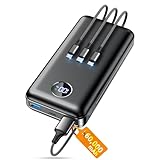
Networking all day at a tech event can be stressful when your phone is dropping to 5 percent before the afternoon coffee break. Long days, many apps, constant photos, and contact sharing drain power fast. To help with that, here are 5 top high-capacity power bank picks based on real user feedback:
Top Rated High-Capacity Power Banks For All-Day Networking
Below are the most trusted, high-capacity options, handpicked around reliability, real-world performance, and event use. These are not random gadgets; they are solid, battle-tested choices for long networking days.




Why High-Capacity Power Banks Matter At Tech Events
At a busy conference, a dead phone does more than ruin your mood. It quietly shuts down a lot of opportunities. No messaging, no QR check-ins, no calendar, no quick product demo from your pocket.
Most people underestimate how much power they use during long networking days. Between ride-share apps, event apps, maps, LinkedIn, email, and a camera that never rests, battery drain is intense. That small 5,000 mAh pocket brick that seems fine for weekends often collapses halfway through an event.
For all-day networking, a high-capacity power bank is less of a nice extra and more of a basic tool, like a notebook or a good pair of shoes.
So the goal here is simple: help you pick a power bank that will comfortably last the entire day, maybe two, without needing a wall outlet or frantic charging at a crowded power strip.
How Much Capacity Do You Actually Need?
Power banks use milliamp-hours (mAh) as the main number. Higher means more stored energy, but also more size and weight. For all-day networking, there is a sweet spot rather than a single perfect number.
Typical Capacity Ranges
| Capacity (mAh) | Rough Phone Recharges | Best For |
|---|---|---|
| 5,000 – 10,000 | 1 to 2 full charges | Short meetings, half-day events |
| 10,000 – 20,000 | 2 to 3 full charges | Most single-day events |
| 20,000 – 30,000 | 3 to 5 full charges | Multi-day conferences, power users |
| 30,000+ | 5+ full charges | Heavy use, multiple devices |
Real capacity is always a bit lower than the printed number. Losses happen when power is converted from the battery to your device. So a 20,000 mAh pack might feel more like 13,000 to 16,000 mAh in real use.
For most networking days, 20,000 mAh is the practical minimum for anyone who relies heavily on their phone, and 10,000 mAh is the bare edge for lighter users.
If you use your phone for note-taking, hotspot, photos, and social media all day, 20,000 to 25,000 mAh gives a comfortable safety margin. If you need to power a tablet or small laptop on top of a phone, go higher.
Key Features To Look For In A High-Capacity Power Bank
Capacity is only the starting point. Several other details have a big effect on real-world use during long networking days.
1. Output Power And Fast Charging
Look at the output power measured in watts (W), often through USB-C or USB-A ports.
Common fast charging levels:
- 10 W to 12 W: Basic charging, slow for large phones
- 18 W: Good fast charging for many phones
- 20 W to 30 W: Very solid for phones and small tablets
- 45 W and up: Useful for some laptops and larger tablets
During a conference, fast charging is a real advantage. You might only have 15 minutes between sessions. You need as much power into your phone as possible, not a slow trickle.
For networking use, aim for at least one USB-C port that supports around 18 W or higher fast charging so a short break can recover hours of battery life.
Also check if the power bank supports the same fast charging protocol as your phone or laptop, such as Power Delivery (PD) or similar standards. When the standards line up, charging is faster and more consistent.
2. Number And Type Of Ports
At events, people often end up charging more than one device. Phone plus earbuds. Phone plus tablet. Or being the helpful person who rescues a colleague at 3 percent battery.
Good things to look for:
- At least one USB-C port for modern devices
- One or two USB-A ports for older cables
- A clear label for input vs output on the ports
- Ability to charge multiple devices at the same time with decent speed
A lot of power banks can charge two or three devices at once, but there is a catch. Power is usually shared between all ports. So three devices at once often means slower charging for each. Some better models manage this more intelligently and keep speeds usable.
3. Size, Weight, And Portability
Big capacity almost always means more weight. That is simple physics. The trick is balancing comfort with how much power you really need.
For all-day networking, the power bank will probably live in one of three places:
- Messenger bag or backpack
- Small sling or handbag
Here is a rough guide:
| Capacity Range | Common Weight | Typical Feel |
|---|---|---|
| 10,000 mAh | 180 to 250 g | Pocketable, fairly light |
| 20,000 mAh | 350 to 500 g | Works better in a bag |
| 26,000+ mAh | 500 g and up | Feels chunky, bag strongly advised |
For pure comfort during networking, many people end up happiest with a slim 10,000 or 20,000 mAh unit that can slide behind a phone while held in one hand. If a power bank feels like a brick, it tends to get left in the hotel room, which defeats the point.
4. Build Quality And Durability
Events are not gentle. Bags get tossed under seats, devices get dropped, and cables get yanked.
Signs of good build quality:
- Solid, non-creaky casing when squeezed lightly
- Clean seams with no sharp edges or loose parts
- Reinforced cable ports that do not move when the plug is wiggled
- Scratch-resistant or textured finish that hides wear
Some power banks have rubberized or ridged surfaces that help grip when hands are sweaty from long walks between venues. This may sound minor, but nobody enjoys watching a power bank slide slowly off a sloped chair onto the floor.
5. Safety Features
High-capacity batteries store a lot of energy. Safety is not a bonus; it is a requirement. Look for mention of protection features like:
- Overcharge protection
- Overcurrent protection
- Short-circuit protection
- Temperature control or thermal protection
- Certification marks that indicate compliance with common safety standards
Many good models will shut down output automatically if there is an issue, such as a cable fault. That is what you want. Silent protection working in the background.
6. Pass-Through Charging
Pass-through charging means the power bank can charge your devices while it is being charged itself. This is handy in hotels with limited outlets or airports where you get one socket and multiple gadgets.
However, not all power banks handle this feature equally well. Some limit speed during pass-through, and some models skip it completely. If charging everything from a single outlet is part of your usual routine, make sure the feature is clearly mentioned.
7. Clear Charge Indicators
Simple LED dots are common. They show rough percentages such as 25 percent, 50 percent, and so on. That is better than nothing but can be vague.
Premium models might have:
- Numeric percentage displays
- Icons for fast charging status
- Separate indicators for different ports
During a long conference day, clear indicators help you plan. You do not want to discover that your power bank is almost empty right before a keynote you planned to record in full HD.
Pros And Cons Of High-Capacity Power Banks For Networking
No tool is perfect. High-capacity power banks solve many problems but bring a few small trade-offs too.
Advantages
- Multiple full charges: Enough power to charge your phone several times, even with heavy use.
- Support for multiple devices: Charge phone, earbuds, and sometimes a tablet or small laptop from a single unit.
- Less outlet hunting: No need to fight over wall sockets or stand near charging stations instead of networking.
- Fast charging options: Many high-capacity models support higher wattage for quick top-ups between sessions.
- Backup for colleagues: Being the person who can lend a little power can actually start conversations.
- Good for travel days: Works for flights, trains, and hotel stays, not just events.
- Longer gadget life: Reduces deep discharge stress on phone batteries over long, heavy-use days.
Disadvantages
- More weight to carry: Large capacity often feels noticeable in a pocket or small bag.
- Longer recharge time: Big batteries take more time to refill, especially with weaker chargers.
- Higher price: Quality high-capacity models cost more than compact low-capacity units.
- Overkill for light users: If you barely touch your phone, you may never use most of the stored power.
- Possible size issues: Some units are too thick for tight pockets or slim bags.
- More to remember: Another thing that needs charging and packing before a trip.
- Air travel limits: Very high capacity models might be close to airline battery limits, depending on the rules.
Practical Usage Tips During Events
The right power bank helps, but how it is used during the event also matters. Some small habits can make the difference between a relaxed end of day and a battery emergency at 6 pm.
Pair It With The Right Cable
A fast charger is only as good as its weakest link, and that link is often the cable. Use short, good-quality cables that support fast charging. Long, thin, cheap cables tend to drop power and feel slow.
Keeping cable length reasonable also helps with comfort, especially when holding phone and power bank together while walking between sessions.
Charge Smart During Breaks
Instead of waiting for your phone to reach 5 percent, connect it during any longer break:
- During keynotes where you are mostly listening
- While sitting down for coffee or lunch
- On the train or ride-share to and from the venue
Short, frequent top-ups work surprisingly well. Fast charging from a good power bank can bring your phone from 30 percent to 70 percent in the time it takes to grab a coffee.
Keep The Power Bank Accessible
If the power bank is buried at the bottom of a backpack under swag and notes, you will not use it as often. It helps to give it a dedicated spot:
- Side pocket of a backpack
- Top pocket of a messenger bag
- Small tech pouch with cables and adapters
Easy access reduces friction. It sounds small, but it changes how often you top up your phone and how calm you feel later in the day.
Share Power Strategically
Sharing a power bank is nice, but draining it early can leave you stuck later. If you expect to help others, choose a higher capacity model or set some mental limits.
A simple rule is to keep at least one full phone charge in reserve for yourself, even if a few friends need a quick lift from single digits.
This way you are helpful but not stranded later in the evening when you need maps, tickets, and ride-share apps to get back.
Buyer Guide: Matching A Power Bank To Your Networking Style
Not everyone uses their devices the same way during events. A startup founder doing demos all day has different needs from a product manager checking email and snapping a few photos.
Light User
Profile: Checks messages, uses the event app, a few photos, maybe one or two social posts.
Recommended features:
- 10,000 to 15,000 mAh capacity
- One USB-C and one USB-A port
- At least 18 W fast charging for quick boosts
- Slim design that fits in a pocket or small bag
This setup covers one long day comfortably and still feels easy to carry.
Power User
Profile: Heavy social posting, constant email, note-taking, a lot of photos, and maybe some short video.
Recommended features:
- 20,000 to 25,000 mAh capacity
- Multiple outputs with at least one strong USB-C PD port
- Solid build quality for daily handling
- Clear percentage display to track remaining power
This level suits founders, marketers, and sales people who basically live on their phone during events.
Multi-Device User
Profile: Phone plus tablet or small laptop, maybe wireless earbuds, possibly a second phone.
Recommended features:
- 25,000 mAh or higher capacity
- High wattage USB-C output, ideally 30 W or higher
- Three or more output ports
- Pass-through charging for hotel use
This is the most flexible setup and naturally heavier, suited to people who already carry a backpack or laptop bag all day.
Common Mistakes When Buying A High-Capacity Power Bank
There are a few traps that catch a lot of buyers, especially when browsing quickly before a trip.
Chasing The Highest mAh Number Only
A 30,000 mAh unit with poor build quality, weak ports, and slow charging can feel worse than a 20,000 mAh model that charges faster and weighs less. Capacity alone does not describe the full experience.
Ignoring The Input Power
Many people check how fast the power bank can charge devices, but forget to check how fast the power bank itself can recharge. If input is limited to, for example, 10 W, refilling a large battery can take many hours.
Look for higher input power through USB-C, such as 18 W or more. That way a long evening or overnight charge can fully refill the power bank before the next day.
Buying The Cheapest Possible Option
Low prices are tempting, but at very low cost points something has to give. Often it is build quality, consistency of output, or internal safety features.
For a tool that will sit next to your phone and travel often, paying a little more for reliability is a reasonable trade.
Not Thinking About Future Devices
Phones change quickly. Many new devices focus on USB-C and faster charging standards. A power bank with only old-style ports or very low wattage may feel limited within a short time.
Choosing at least one strong USB-C port and a modern fast charge standard helps keep the power bank useful when you upgrade your phone or tablet.
Simple Checklist Before You Buy
Here is a short checklist you can run through quickly when looking at any high-capacity power bank.
- Capacity fits your usage: at least 20,000 mAh for heavy networking, 10,000+ for lighter use
- USB-C port with at least 18 W output, more if you charge tablets or laptops
- Enough ports for your typical devices, plus one spare if you often help others
- Weight and size that you are happy to carry all day
- Clear indicators for remaining charge
- Safety features and visible certifications
- Decent input speed so the power bank refills quickly at night
FAQ: High-Capacity Power Banks For All-Day Networking
How big should a high-capacity power bank be for all-day networking?
For most people at tech events, a power bank in the 20,000 to 25,000 mAh range works well. It usually gives several full phone charges, supports heavy app usage, and leaves some backup for emergencies or a second device.
Is a 10,000 mAh power bank enough for networking events?
A 10,000 mAh power bank can be enough for lighter users who mostly check messages and use the event app sometimes. For heavy camera use, social media posting, or hotspot use, it often feels tight, especially across a long day and evening meetups.
What is the best charging speed for a power bank used at conferences?
A power bank with at least 18 W output on USB-C gives a good balance of speed and cost. It lets many phones charge quickly during short breaks. For tablets or small laptops, looking for 30 W or more on USB-C helps a lot.
How many times can a high-capacity power bank charge a phone?
Different phones have different battery sizes, but as a rough guide, a 20,000 mAh pack often gives around 3 to 4 charges for an average modern smartphone. A 10,000 mAh model might provide around 1.5 to 2 charges in real use.
Do high-capacity power banks charge laptops as well as phones?
Some do, some do not. The key is output wattage and USB-C Power Delivery support. A power bank with 30 W to 65 W USB-C output can often charge smaller laptops or at least slow their discharge. Lower wattage models are usually fine for phones but not ideal for laptops.
Are bigger power banks always better for networking?
Not always. Larger capacity means more weight and longer recharge time. For many people, a medium-capacity, slim, comfortable unit that fits in a pocket or small bag gets more real-world use than a huge, heavy brick that stays in the hotel room.
Can a high-capacity power bank be carried on planes when traveling to events?
Airlines usually allow power banks in carry-on bags within a certain watt-hour range. Very large units may come close to that limit. Checking the watt-hour rating and airline rules before travel avoids problems. For most standard 20,000 to 26,000 mAh packs, this is usually straightforward.
Is pass-through charging useful for high-capacity power banks at events?
Pass-through charging is handy when outlets are limited, such as in hotel rooms or shared workspaces. It lets you charge the power bank and your devices from one socket. For event days, it helps simplify overnight charging and reduces cable clutter.
What is the best way to carry a high-capacity power bank at a conference?
Most people find it comfortable to keep the power bank in a side pocket of a backpack, a messenger bag, or a small sling. The key is easy access, so you do not hesitate to connect your phone during short breaks.
How long do high-capacity power banks last before they need replacing?
Quality power banks usually handle hundreds of charge cycles before capacity starts to drop noticeably. For someone who attends events occasionally and charges the power bank between trips, that can mean several years of practical use, depending on care and storage.
So, is a high-capacity power bank worth it for all-day networking?
For anyone who relies on a phone to manage contacts, capture content, and keep schedules during long tech events, the answer is almost always yes. A well-chosen power bank removes one major source of stress so attention can stay on people, ideas, and conversations instead of battery icons.
The key is not buying the biggest number on the shelf, but choosing a balanced, reliable power bank that matches your devices, your bag, and your style of working the room.